Interactive Web App · 2026
TalesRunner Wardrobe
Rebuilding a nostalgic game's entire item catalogue as structured data, then turning it into a fast, shareable loadout planner.
- JavaScript
- Python
- Data Modeling
- Data Pipeline
- URL State
- Vercel
16,001 catalogued items, per-character wearability rules, and a full build shared as a single URL.
Overview
TalesRunner ships no API and no documentation, and players trade equipment builds as screenshots nobody can reproduce. I rebuilt the game's full catalogue as structured data — 16,001 items and 50 characters — and used it to build an unofficial wardrobe that turns any complete loadout into a single shareable link.
The source data follows no published format: UTF-16LE text, a magic header line, and a schema tucked into a commented CSV row. Item attributes are stored as bare integer IDs, so I mapped them back to real stats by cross-referencing values visible in game, then checked the result against builds I could verify in play. Everything is generated by a Python pipeline rather than typed by hand.
The most interesting rule was not in any table: which characters can actually wear which item. I inferred it from the game's asset topology — an item is wearable by a character only when that character's own model and texture exist for it — which collapsed into 102 distinct wearability signatures, layered with a gender lock and the game's own per-character whitelist. It also surfaced an undocumented field that decides whether an item's effect applies to the Avatar layer or the character.
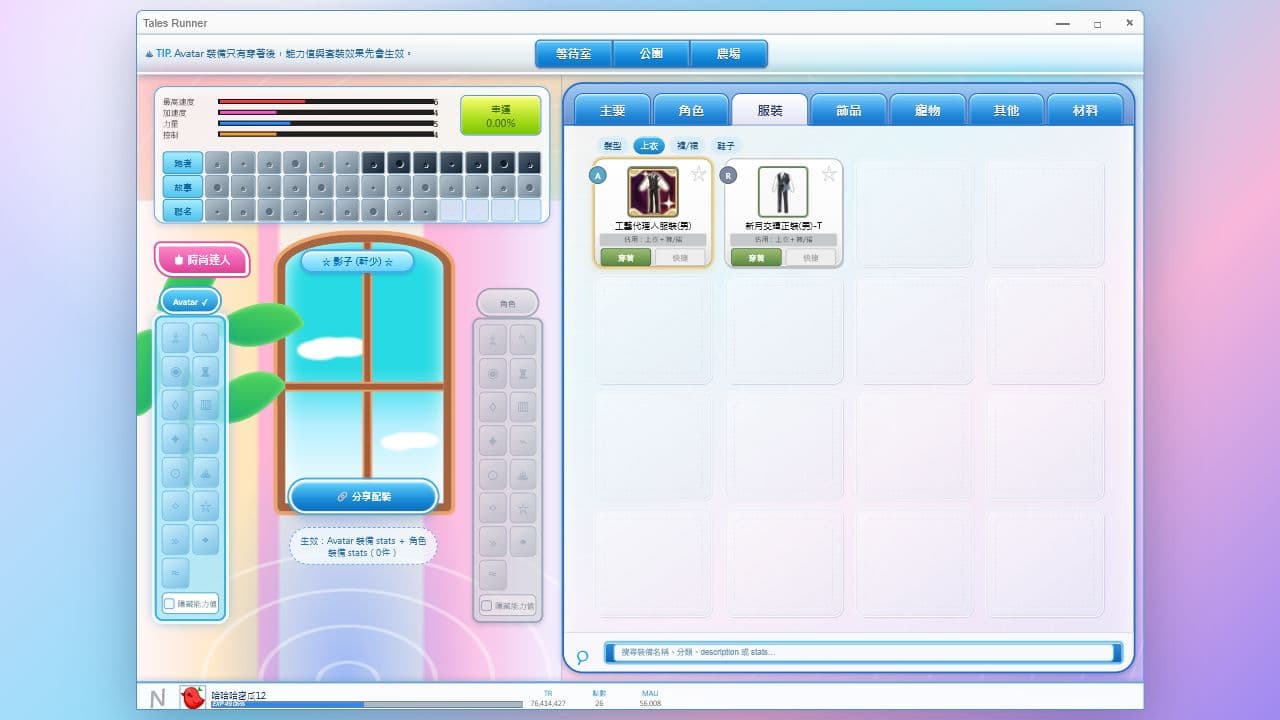
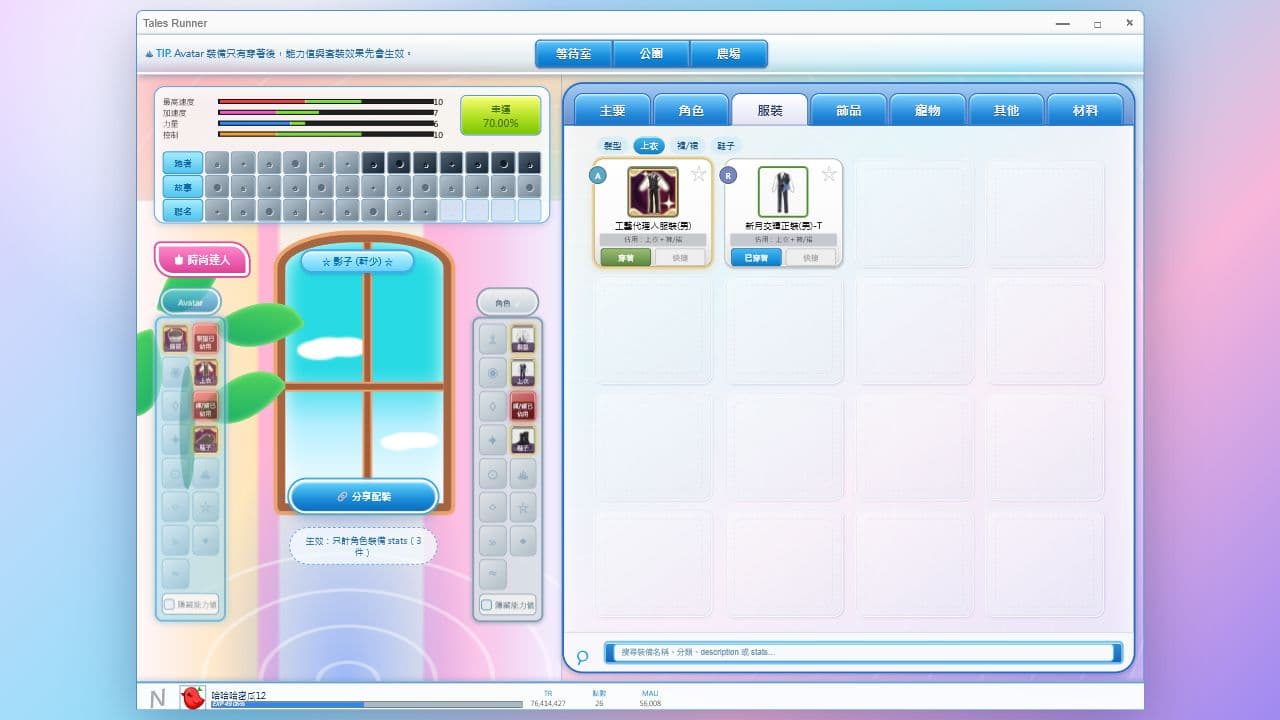
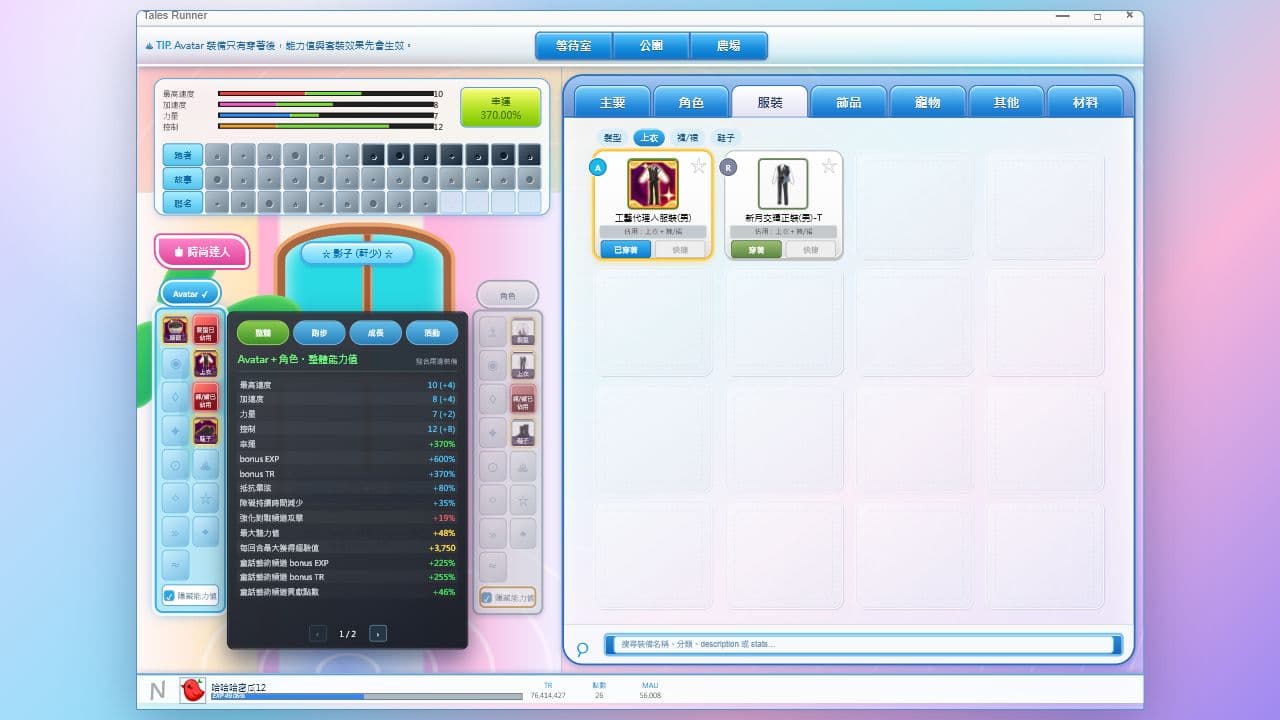
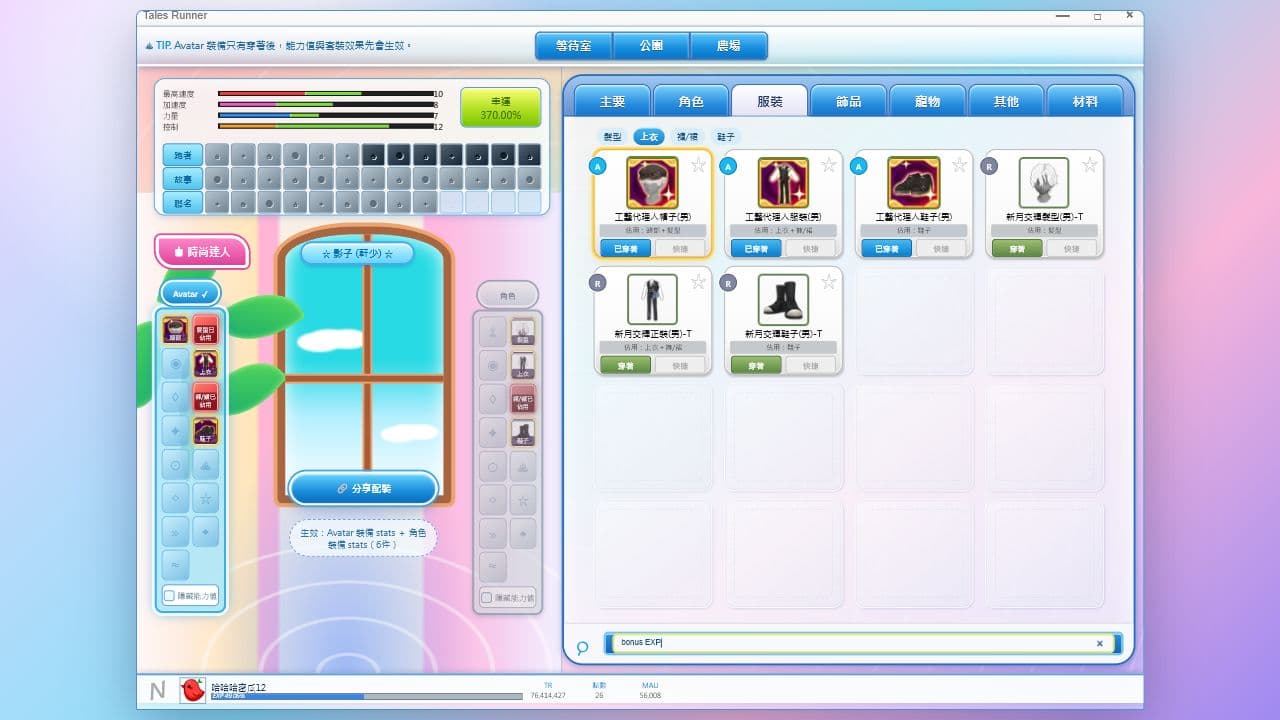
On top of that data sits the app: two independent equipment layers across 15 slots, multi-slot occupancy, set bonuses, search, and live stat aggregation against per-character base stats. The whole configuration is serialized into the URL hash, so another player restores the exact build with no account, database, or backend.
Highlights
- 16,001 items and 50 characters compiled by an automated pipeline, not hand-entered
- Mapped an undocumented table encoding and bare attribute IDs back to verified in-game stats
- Per-character wearability inferred from asset topology — 102 distinct signatures
- Independent Avatar and character equipment layers across 15 slots
- Live stat aggregation with set bonuses and cap-raising modifiers
- Shareable URL state with no login, database, or backend
Screens